
Why Suspension PTFE Delivers Stronger, Smoother Parts
3 min read
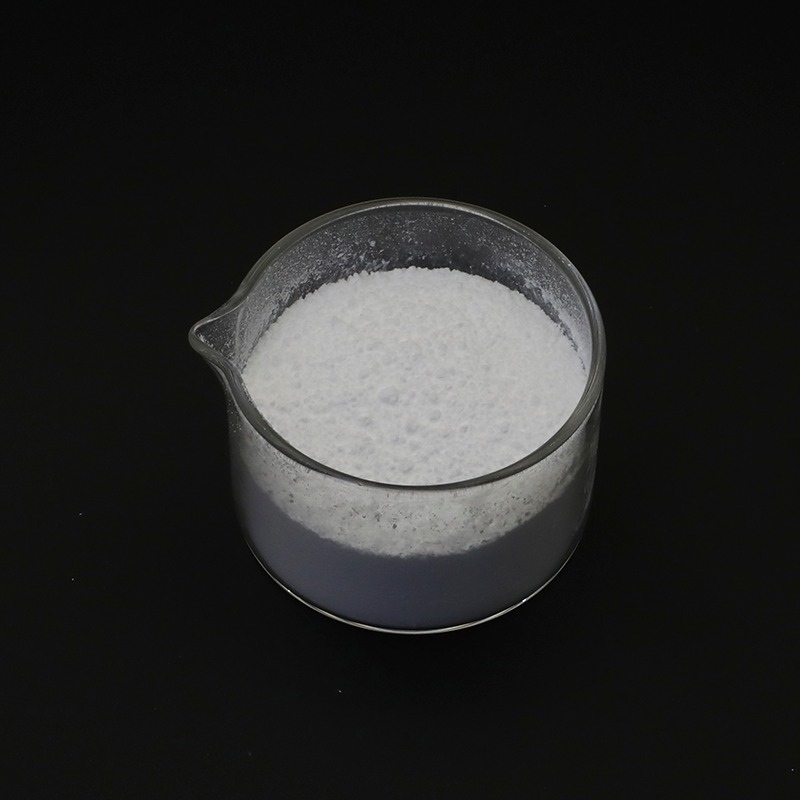
When engineers ask why some PTFE parts outlast others, the answer almost always starts with the resin. Suspension PTFE — the granular molding powder produced by suspension polymerization — is the raw material behind the strongest, smoothest and most reliable PTFE parts in service today: seals that hold under pressure, gaskets that shrug off years of chemical attack, and bearings that keep sliding long after lesser plastics have worn away.
This article explains what suspension PTFE is, how its main grades differ, and how to choose the right one for demanding applications.
What is suspension PTFE?
PTFE is made by two polymerization routes, and the route determines the product. Emulsion polymerization produces PTFE fine powder for paste extrusion; suspension polymerization produces larger granular particles that are compressed under high pressure and then sintered above 340 °C into solid stock shapes. If you want the full background, see our guide to what PTFE granular resin is and what it is used for.
That granular structure is what gives suspension PTFE parts their signature property set:
- Near-total chemical inertness — essentially unaffected by nearly all industrial chemicals
- Continuous service temperature up to 260 °C
- An ultra-low coefficient of friction that few engineering plastics can match
- Strong electrical insulation across a wide frequency and temperature range
- Excellent aging behavior, with no embrittlement over long service life
Because the material is molded and sintered into billets, it can be machined into almost any geometry — which is why it dominates precision sealing and bearing applications.
The suspension PTFE grade lineup
Not all granular resins are the same. Suppliers typically offer four base grades plus customized compounds:
- Fine cut — smaller particles for lower permeability and a smoother surface finish; the default for high-integrity seals and gaskets
- Free-flow — agglomerated particles that pour like dry sand, ideal for automatic molding of large or complex parts
- Semi-flow — a middle ground with partial flowability, balancing surface quality against mold-filling behavior
- Pre-sintered — already taken through a sintering cycle, giving stabilized shrinkage and low porosity for large rods and consistent machining
- PTFE compounds — suspension PTFE blended with glass fiber, bronze, carbon fiber or graphite to solve specific wear, creep or friction problems
Where these grades pay off
The applications where suspension PTFE reliably outperforms alternatives share one theme: harsh environments with no room for failure.
- Seals and gaskets in chemical plants, where the part may sit in contact with aggressive media for years
- Bearings and bushings under load, especially filled grades that resist wear and creep
- Valve seats and seals in chemical systems, where low friction prevents sticking and inertness prevents corrosion
- Precision-machined components — pump parts, bellows, insulators — that need tight tolerances and stable dimensions
How to choose the right grade
A short decision framework that covers most cases:
- Start from the application environment: chemical exposure, temperature range, pressure and whether the part slides against a mating surface.
- If the part is molded automatically or in complex geometry, shortlist free-flow or semi-flow grades; for maximum chemical integrity in simple shapes, fine cut wins.
- For large machined stock, specify pre-sintered material to keep shrinkage predictable.
- If the failure mode is wear or creep rather than chemical attack, move to a filled PTFE compound.
Sourcing consistently matters as much as choosing the right grade. Particle size distribution and lot-to-lot shrinkage control determine whether your machining process stays stable.
At Haiflon® (Shanghai Fluorochem), we supply the full suspension PTFE range — fine cut, free-flow, semi-flow, pre-sintered grades and customized PTFE compounds — for demanding applications across chemical, mechanical and electrical industries. Share your application and we will recommend a grade.
Frequently Asked Questions
What is the difference between fine cut and free-flow PTFE?
Fine cut suspension PTFE has smaller particles and higher bulk density after preforming, giving lower permeability and a smoother finish for precision seals and gaskets. Free-flow grades flow like dry sand into molds, which suits automatic molding of large or complex parts where consistent die filling matters more than surface finish.
When should I use presintered PTFE instead of a virgin grade?
Presintered PTFE has already been through a sintering cycle, which stabilizes shrinkage and reduces porosity. Choose it for large-diameter rods and machined parts where dimensional consistency across the blank matters, or for alloys with fillers that are difficult to process in a single pass.
Can suspension PTFE parts be customized with fillers?
Yes. Suspension PTFE accepts glass fiber, bronze, carbon fiber and graphite fillers to improve wear resistance, creep resistance, thermal conductivity or friction behavior. Supplied as ready-to-mold PTFE compounds, filled grades typically extend the service life of bearings, bushings and dynamic seals well beyond virgin material.
Related Haiflon® Products
Talk to a Haiflon® engineer
Tell us your application, target specifications and volume — we will recommend grades, share TDS and quote within 24 hours on business days.